Introduction
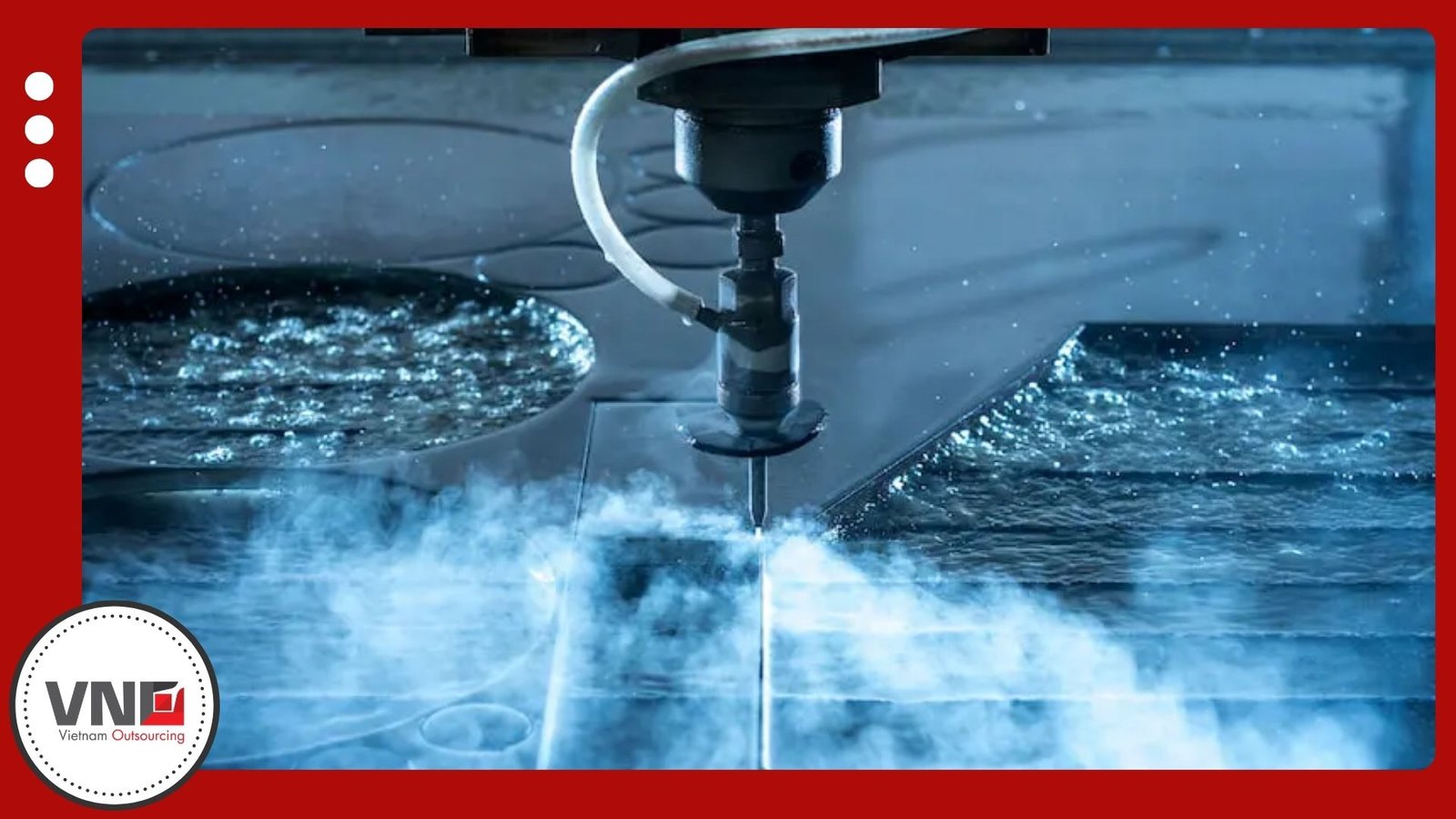
Water jet machining is an advanced cutting process that uses a high-pressure stream of water, or a mix of water and abrasives, to cut through different materials. Unlike plasma or laser cutting, this is a cold-cutting method, meaning no heat is applied to the workpiece. This ensures precision without affecting the material’s properties.
Today, water jet systems are widely used in aerospace, automotive, mining, medical device production, and general metalworking.
What Is Water Jet Machining?
This method relies on pressurized water accelerated through a fine nozzle to form a concentrated jet. With abrasives like garnet added, it can cut tough metals such as steel, aluminum, brass, and titanium.
With speeds of up to 760 m/s, it provides accuracy, efficiency, and reduced material waste.
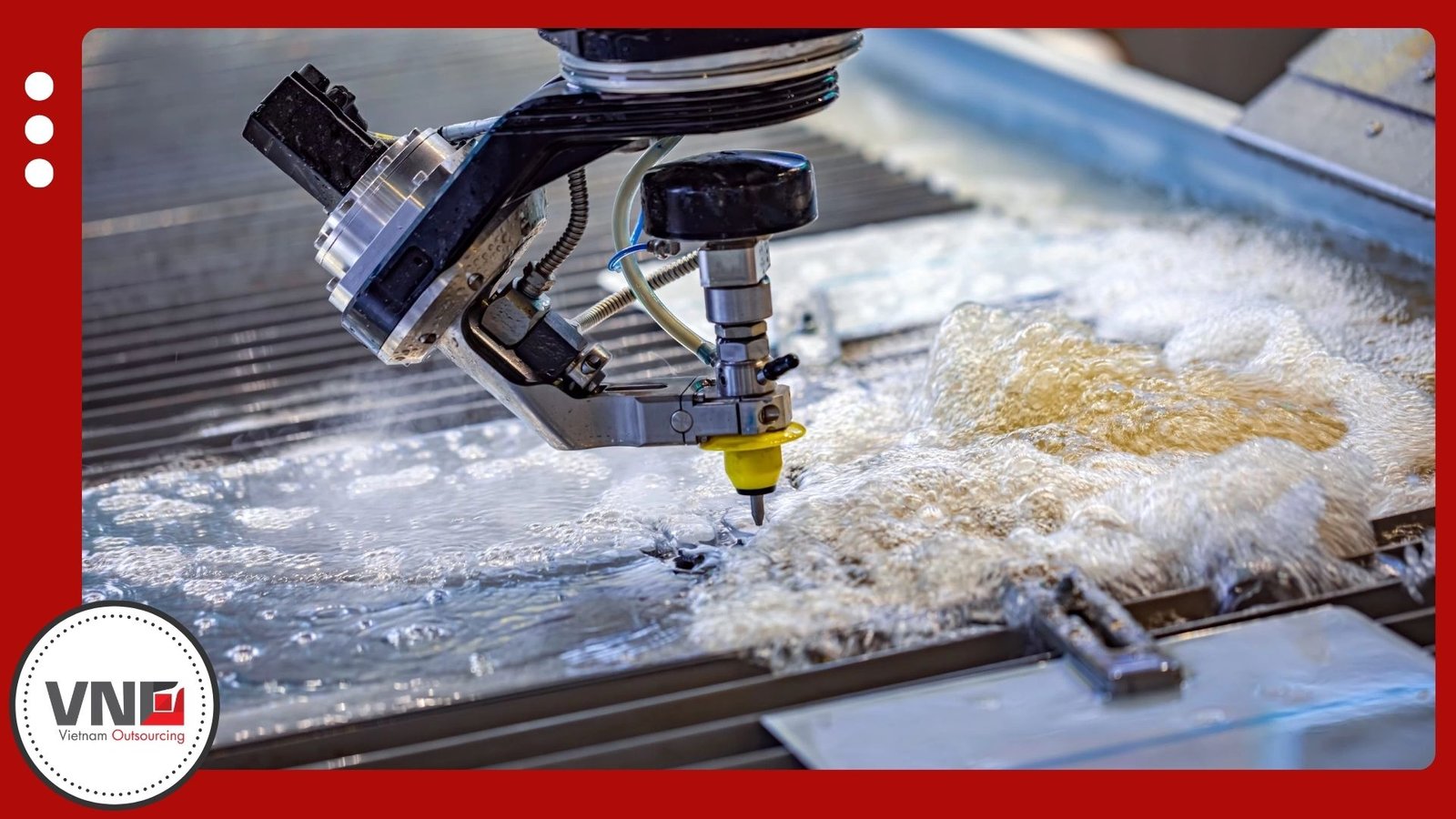
Construction of a Water Jet Cutting Machine
A typical system includes:
- XY Motion Table – Provides precision control of the cutting path.
- High-Pressure Pump – Generates the water pressure required.
- Cutting Head and Nozzle – Focuses the water jet for clean cuts.
- Control Software – Converts CAD/CAM designs into machine instructions.
Supporting components include hoses and nozzles built to withstand extreme pressure and wear. You can also want to know more about abrasive water jet machining
How Does It Work?
- Pressurization: A pump (direct drive or hydraulic booster) creates extreme water pressure.
- Acceleration: Water travels through reinforced hoses to the nozzle.
- Focusing: The nozzle shapes the water jet, sometimes mixing in abrasive material.
- Cutting: The jet exits at ultrahigh speed, eroding and cutting the workpiece with precision.
Advantages of Water Jet Machining
This technology provides several benefits:
- Cold Cutting – No heat-affected zones, no structural changes, and no deformation.
- Versatility – Works with metals, plastics, composites, stone, and ceramics.
- Precision – Delivers smooth edges and intricate shapes without rework.
- Cost Efficiency – More affordable than many laser systems, with minimal waste.
- Safety and Clean Operation – No smoke, toxic fumes, or sparks.
- Flexibility – Abrasive water jets allow cutting of very hard materials.
Applications
Because of its adaptability, water jet technology is used in:
- Aerospace: Cutting lightweight alloys and composites.
- Automotive: Producing precision machining parts without thermal stress.
- Medical devices: Manufacturing implants and surgical tools.
- Mining & construction: Shaping stone, tile, and thick metals.
- Architecture & design: Decorative cutting of glass, ceramics, and metal.
Conclusion
Water jet machining is a reliable, precise, and efficient solution for industries requiring clean, heat-free cuts. Its ability to handle a wide range of materials and thicknesses makes it one of the most flexible cutting methods available today.
Looking for professional cutting solutions? Contact Vietnam Outsourcing (VNO) to access expert services in water jet machining tailored to your projects.