Introduction
Gravity casting in Vietnam has become a reliable solution for producing non-ferrous metal parts. Foundries use this method to cast aluminum, zinc, and copper components with excellent surface quality. Vietnam die casting supplier often chooses gravity casting for large-sized details where cost efficiency and durability are essential.

Characteristics of Gravity Casting
Unlike other casting methods, gravity casting uses natural force to fill the mold instead of compressed air, vacuum, or centrifugal pressure. Molten metal flows directly from a crucible into a mold, where it solidifies to form the final part.
Molds are usually made from sand, stone, or gypsum. These materials are affordable, easy to shape, and resistant to high temperatures. Because of these advantages, gravity die casting is well-suited for parts with simple geometry and lower precision requirements.
The Gravity Casting Process
Step 1: Mold Preparation
Workers preheat the mold and apply a thin anti-stick coating. This layer prevents adhesion, allows easier release, and functions as a coolant when the casting is removed.
Step 2: Metal Pouring
Molten alloy is poured into the mold until it fills the cavities. To reduce turbulence and porosity, the metal often enters through the bottom of the mold. This method creates stronger parts with fewer defects.
Step 3: Cooling and Removal
After cooling, operators open the mold and remove the casting. The product is then ready for finishing or direct use, depending on design requirements.
Applications
Gravity casting offers many benefits for industrial production:
-
Produces smoother surfaces than sand casting.
-
Improves mechanical strength through controlled cooling.
-
Saves machining time with better dimensional accuracy.
-
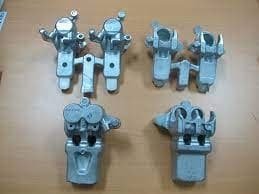
Handles large and medium-sized components, such as automotive housings, pump bodies, lighting parts, and decorative castings.
Conclusion
Gravity casting in Vietnam continues to grow as industries demand cost-effective and durable solutions for non-ferrous metals. With its ability to produce strong, smooth, and large castings, this process remains an important part of Vietnam’s manufacturing sector. For more die casting methods, you might want to read Sand casting vs die casting