Introduction
The pace of change in CNC machining is faster than ever. Because of new technologies such as AI-driven automation and cloud-based digital twins, manufacturers are rethinking how they design, produce, and deliver parts. As a result, companies that adopt these innovations gain clear advantages in efficiency, quality, and sustainability.
In this article, we explain six important CNC precision machining trends in 2025 that every manufacturer and outsourcing partner should follow to stay competitive.
1. AI-Driven CNC Automation
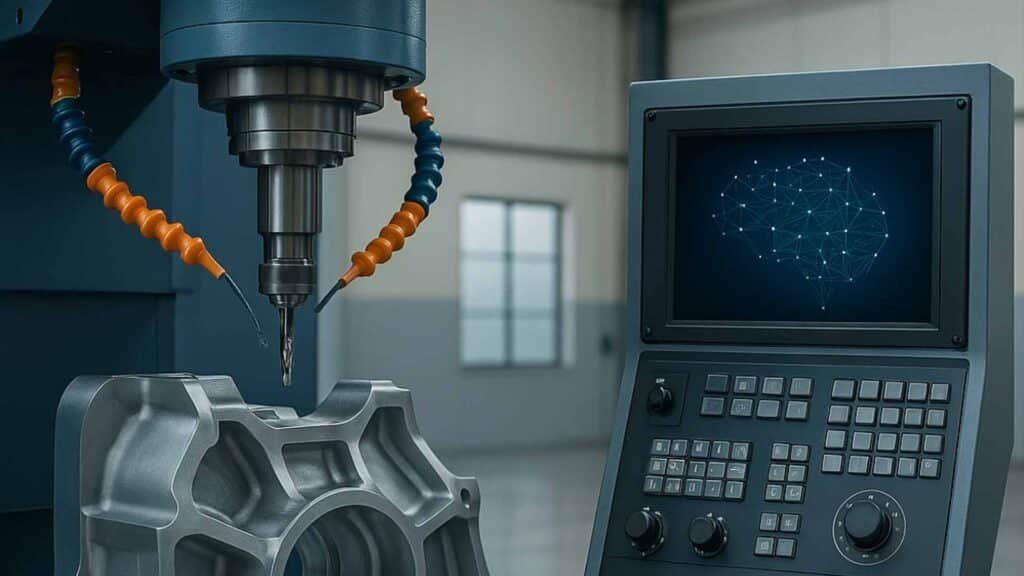
Artificial intelligence is shaping CNC machining trends 2025 in major ways. First, AI improves tool paths and predicts failures before they occur. Second, it reduces downtime and labor costs by analyzing production data in real time.
Therefore, manufacturers can scale faster without losing quality. In short, AI-driven automation is one of the most powerful forces in the CNC industry today.
2. Industrial IoT (IIoT) Integration
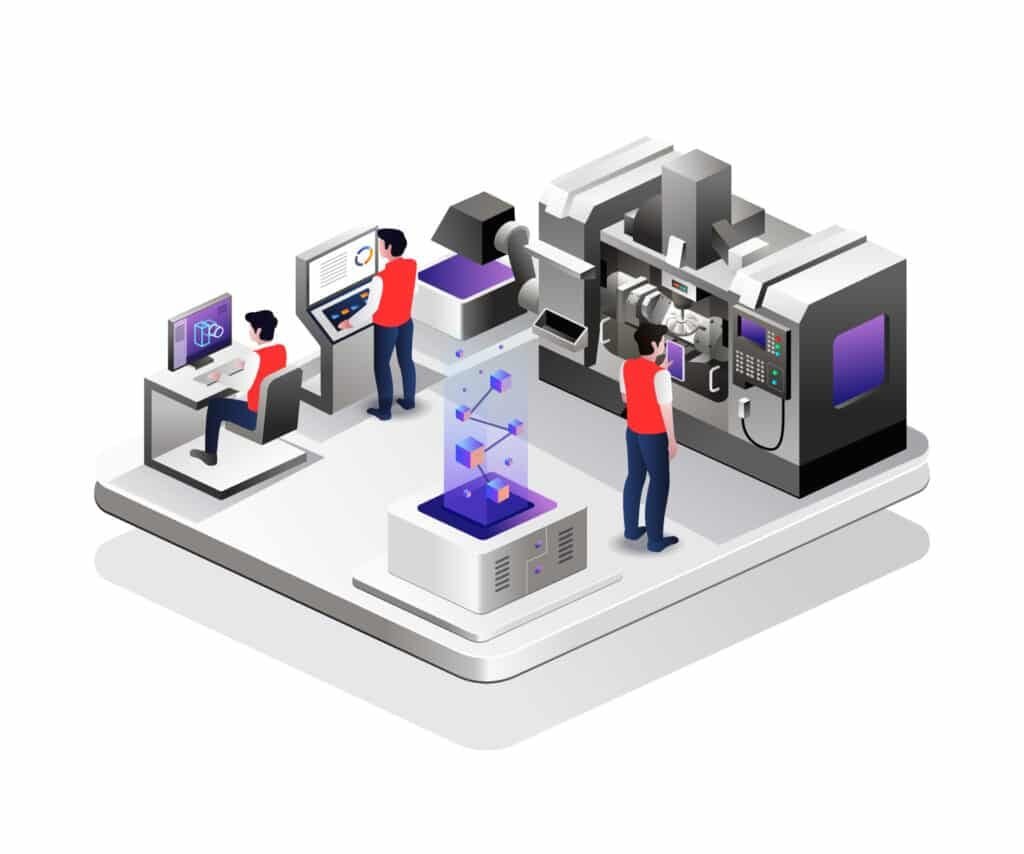
CNC machines are no longer stand-alone. Instead, they are part of connected smart factories. With IIoT sensors, managers can monitor vibration, temperature, and tool wear at any moment.
As a result, companies gain predictive maintenance, higher asset use, and less waste. Moreover, in industries like aerospace and automotive where downtime is extremely costly, IIoT integration delivers clear savings.
3. Hybrid Manufacturing: CNC + Additive
Another key development in CNC machining trends 2025 is hybrid manufacturing. This method combines 3D printing with CNC machining.
With this approach, near-net-shape parts are printed and then refined by CNC machines. Consequently, manufacturers reduce material waste, shorten lead times, and create complex shapes. This is especially valuable for aerospace, defense, and medical sectors, where both innovation and accuracy are critical.
4. Sustainable and Energy-Efficient Machining
Sustainability is no longer optional. In fact, CNC shops in 2025 are expected to adopt greener methods such as:
-
High-efficiency motors that lower energy use
-
Recyclable coolants that reduce waste
-
Optimized cutting strategies that save material
Because of these practices, factories reduce their carbon footprint and meet stricter global standards. Furthermore, buyers in the U.S. and Europe often prefer suppliers with eco-friendly solutions, making sustainability a strong selling point.
5. Advanced Materials Machining
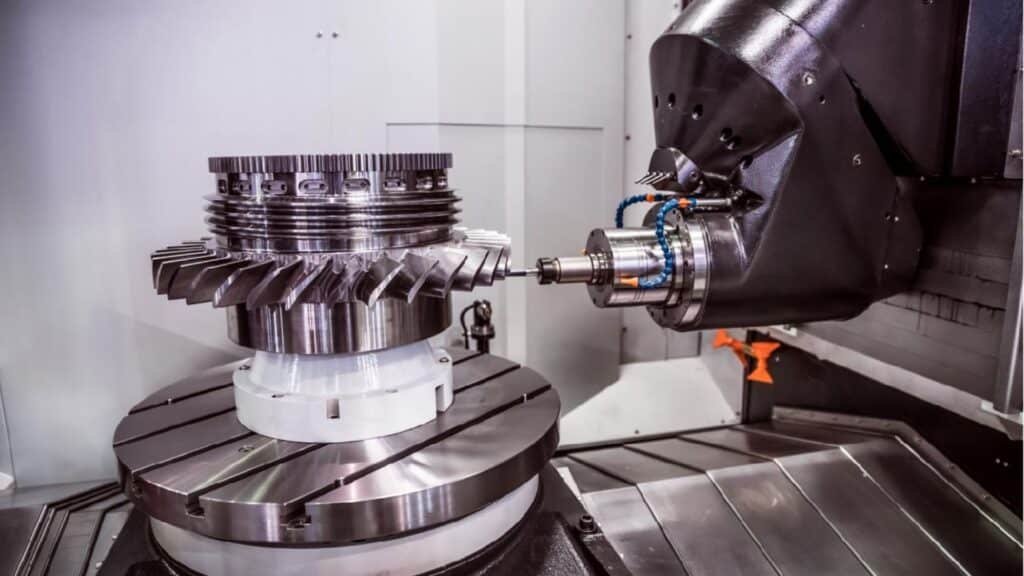
The demand for advanced materials is also shaping CNC machining trends 2025. Industries such as EVs, renewable energy, and aerospace require titanium, composites, and high-performance alloys.
To handle these materials, factories are adopting high-speed spindles, adaptive cutting software, and special tooling. As a result, suppliers can serve high-value markets that demand both precision and reliability.
6. Cloud-Based CNC Monitoring and Digital Twins
Finally, cloud platforms are transforming the way companies manage CNC operations. Today, manufacturers use the cloud for remote programming, real-time monitoring, and data analytics.
At the same time, digital twin technology is becoming more common. It creates virtual copies of machines and processes. Consequently, engineers can test scenarios before cutting material. This reduces errors, speeds up decisions, and improves collaboration.
Conclusion
The CNC machining trends in 2025 show a future driven by AI, connectivity, sustainability, and digital tools. Therefore, companies that adopt these changes will cut CNC Costs, raise efficiency, and strengthen their global position.
Looking for a reliable CNC machining partner in Vietnam? Contact Vietnam Outsourcing (VNO) today for high-quality, cost-effective CNC solutions tailored to your needs.